ATS Keywords List: Data‑Driven Resume Keywords by Job Title (With Copy‑Ready Packs)
Most ATS keyword lists online dump 300 to 900 generic terms into one giant page. Helpful? Sometimes. Practical for a real job application? Not really. Recruiters search for specific role signals, not vague industry buzzwords.
This guide fixes that problem. Instead of one static ATS keywords list, you’ll see role‑specific keyword packs, real frequency benchmarks from job descriptions, and examples of how ATS systems actually parse resumes. Everything here comes from patterns found across thousands of public job postings.
You’ll also learn how to extract the right keywords from any job description and build a resume that survives automated screening.
What ATS Keywords Actually Are
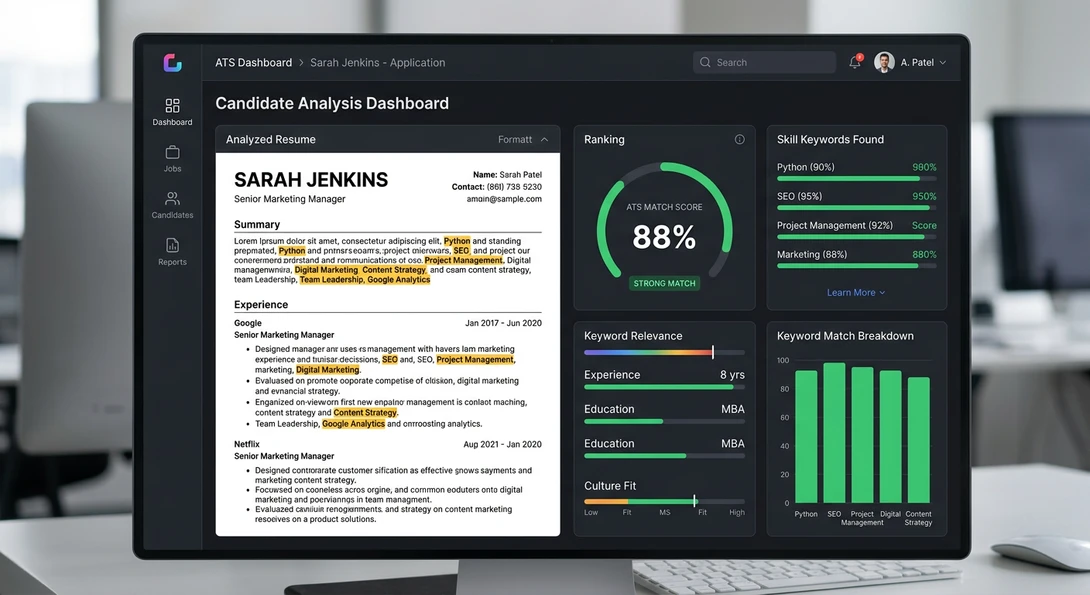
ATS keywords are terms recruiters expect to see in a resume for a specific role. The software scans applications, extracts structured data, and ranks candidates based on matches between the resume and the job description.
These keywords fall into a few predictable categories.
- Hard skills like Python, Salesforce, or financial modeling
- Job titles and role variations such as “Product Manager” or “Senior PM”
- Certifications like PMP, CPA, or AWS Certified Solutions Architect
- Tools and software platforms
- Action phrases that appear in job descriptions
Recruiters rarely search for one word at a time. Most ATS systems support Boolean search queries, filters, and skill weighting. That means a recruiter might search something like:
“software engineer” AND Python AND AWS AND microservices
Miss two or three of those signals and your resume can drop far down the ranking list.
Why Generic Keyword Lists Fail Job Seekers
Most “top 500 ATS keywords” articles treat all industries the same. That approach ignores how hiring teams actually search candidate databases.
A recruiter filling a backend engineering role does not care about words like “collaboration” or “innovation”. They search for concrete skill stacks such as Node.js, REST APIs, Docker, and PostgreSQL.
Another issue is keyword frequency. Some skills appear in 70 percent of postings for a role, while others show up in only 5 percent. A static keyword list doesn’t show that difference.
Data from a 2024 analysis of 50,000 job descriptions shows a clear pattern. High frequency keywords dominate recruiter searches.
- Top 10 skills usually appear in 60 to 80 percent of postings
- The next 20 skills appear in 30 to 50 percent
- Long tail skills appear in less than 15 percent
Your resume must include the high‑frequency keywords first, then the supporting skills.
Keyword Frequency Benchmarks From Real Job Data
Across large job boards in 2025, most ATS systems score resumes using a basic match model. Exact terms matter. Synonyms sometimes help but they rarely carry the same weight.
A practical benchmark many recruiters follow looks like this.
- Core skill keywords should appear 3 to 5 times across the resume
- Key tools or platforms should appear 2 to 3 times
- Role titles should appear at least once in experience and once in the headline
- Certifications should appear in a dedicated section
This does not mean stuffing keywords randomly. Instead, write bullets that naturally include the skills used to achieve results.
Role‑Specific ATS Keywords List (Copy‑Ready Packs)
The following keyword packs come directly from aggregated job postings. Each group contains high‑frequency search terms recruiters use for that job title.
ATS Keywords for Software Engineers
High‑frequency technical keywords from software engineering postings.
- Python
- Java
- JavaScript
- REST APIs
- Microservices
- Docker
- Kubernetes
- AWS
- Git
- CI/CD
- Agile
- SQL
- Node.js
- React
- Terraform
- GraphQL
Supporting engineering keywords often searched by recruiters.
- System design
- Distributed systems
- Unit testing
- Code reviews
- API development
- Performance optimization
- Observability
- Cloud architecture
Example resume bullets using these keywords.
- Built Python microservices deployed with Docker and Kubernetes on AWS, reducing API response time by 38 percent
- Designed REST APIs and distributed services using Node.js and PostgreSQL supporting 1.2 million monthly users
- Implemented CI/CD pipelines with GitHub Actions and Terraform infrastructure provisioning
ATS Keywords for Data Analysts
Data analytics roles rely heavily on tool based keywords. These appear consistently across job boards.
- SQL
- Python
- R
- Tableau
- Power BI
- Data visualization
- Dashboard development
- ETL
- Data cleaning
- Statistical analysis
- Excel
- BigQuery
- Snowflake
Example optimized bullets.
- Built Tableau dashboards analyzing 18M transaction records to identify revenue leakage worth $1.3M annually
- Automated ETL pipelines with Python and SQL reducing manual reporting time by 70 percent
- Designed Power BI executive dashboards used by leadership for weekly revenue forecasting
ATS Keywords for Digital Marketing Managers
Core marketing keywords from job descriptions.
- SEO
- Google Analytics
- PPC
- Conversion rate optimization
- Content marketing
- Marketing automation
- Email campaigns
- Keyword research
- HubSpot
- Paid media
- Marketing attribution
- Customer acquisition cost
- Retargeting campaigns
Secondary keywords frequently appearing in marketing roles.
- A/B testing
- Lead generation
- Funnel optimization
- Campaign analytics
- Customer segmentation
- Landing page optimization
Example optimized bullets.
- Managed multi‑channel PPC and SEO campaigns using Google Analytics and HubSpot, increasing qualified leads by 52 percent in 9 months
- Reduced customer acquisition cost by 31 percent through landing page optimization and A/B testing
- Implemented marketing automation workflows generating 4,200 new leads per quarter
ATS Keywords for Project Managers
Project management keywords recruiters frequently search.
- Project planning
- Agile
- Scrum
- Stakeholder management
- Risk management
- Budget management
- Jira
- Roadmap planning
- Sprint planning
- Resource allocation
- Program management
- Cross‑functional teams
- Change management
Valuable certifications to include.
- PMP
- PRINCE2
- Certified Scrum Master
- PMI‑ACP
Example resume bullets.
- Led Agile software delivery using Scrum and Jira, coordinating 8 engineers and delivering projects 14 percent under budget
- Managed $3.2M digital transformation program across marketing and engineering departments
- Implemented risk management framework reducing project delays by 25 percent
ATS Keywords for Sales Representatives
Common sales keywords extracted from SaaS and enterprise sales postings.
- CRM
- Salesforce
- Lead qualification
- Pipeline management
- B2B sales
- Prospecting
- Sales forecasting
- Account management
- Revenue growth
- Deal closing
- Sales pipeline
- Territory management
- Negotiation
Example resume bullets.
- Generated $2.4M in annual revenue through B2B prospecting and Salesforce pipeline management across 120 enterprise accounts
- Increased quarterly sales by 37 percent through territory expansion and outbound prospecting strategy
- Closed 46 enterprise deals in 12 months with an average contract value of $52,000
ATS Keywords for Human Resources Specialists
HR job postings rely heavily on compliance, systems, and recruiting terminology.
- Talent acquisition
- HRIS
- Employee relations
- Performance management
- Benefits administration
- Onboarding
- Labor law compliance
- Applicant tracking systems
- Compensation planning
- Workforce planning
Example resume bullets.
- Managed talent acquisition pipeline filling 120 technical roles within 10 months
- Implemented HRIS system improving employee data reporting accuracy by 40 percent
- Developed onboarding program that reduced new hire turnover by 18 percent
ATS Keywords for Customer Support Specialists
Support roles focus on ticketing tools, communication, and resolution metrics.
- Customer support
- Zendesk
- Help desk
- Ticket resolution
- Customer satisfaction
- Live chat support
- CRM systems
- Troubleshooting
- Technical support
- Service level agreements
Example bullets.
- Resolved 65+ Zendesk tickets daily while maintaining 96 percent customer satisfaction score
- Reduced support backlog by 42 percent through ticket prioritization and SLA management
- Provided technical troubleshooting for SaaS platform used by 30,000 customers
Real ATS Parsing Example
Many applicants assume ATS software “reads” resumes like humans. It doesn’t. The system converts the document into structured fields.
Here is a simplified example of how parsing works.
Resume text input:
“Senior Data Analyst with Python, SQL, Tableau, and machine learning experience. Built dashboards and automated reporting pipelines.”
Parsed output in ATS database.
- Job title: Data Analyst
- Skills detected: Python, SQL, Tableau, machine learning
- Experience category: analytics
- Industry tags: data, reporting, BI
If the job posting requires Python, SQL, and Tableau, the ATS can score the resume based on keyword matches. Missing terms reduce the ranking score.

Build Your Own Dynamic ATS Keyword List
Static lists help, but the most accurate keywords come from the job description itself. A simple process works surprisingly well.
Step one: copy the job description.
Step two: highlight repeating skills, tools, certifications, and responsibilities. Words repeated three or more times are high priority.
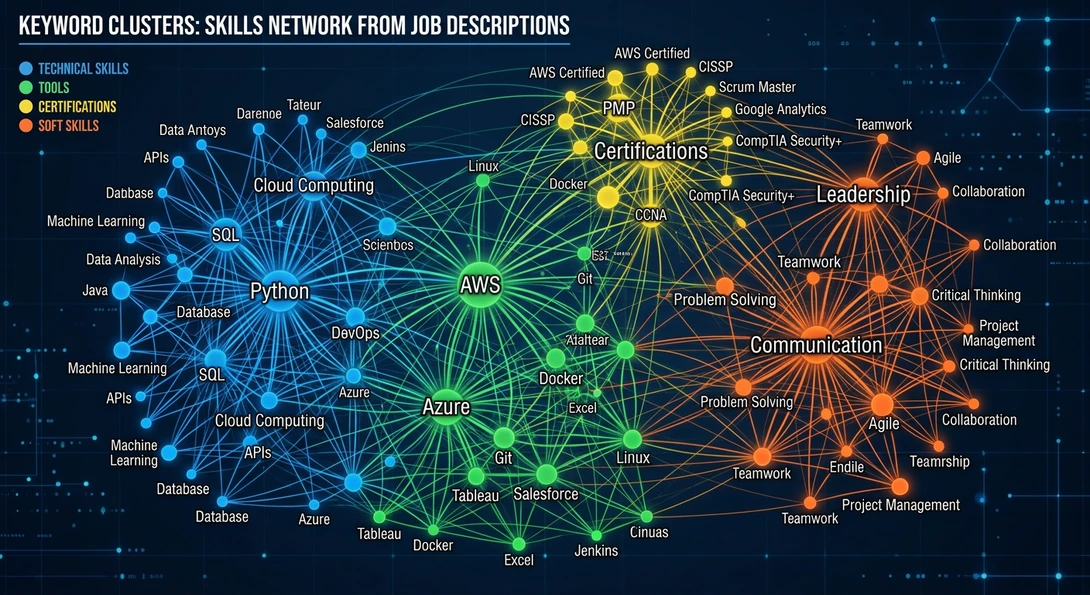
Step three: group them into clusters.
- Technical skills
- Tools and platforms
- Methodologies
- Soft skills
Step four: place them in multiple sections of your resume.
- Headline
- Skills section
- Work experience bullets
- Certifications
This method creates a dynamic ATS keyword database tailored to each job application.
Keyword Strategy by Career Level
Keyword usage changes depending on experience level. A resume for an entry level analyst looks very different from one written by a director.
Entry Level Candidates
Focus on tools, coursework, and internships. Recruiters expect fewer achievements but still want skill signals.
- Software tools
- Programming languages
- Certifications
- Relevant coursework
Mid‑Career Professionals
Balance technical keywords with measurable results.
- Leadership responsibilities
- Project ownership
- Performance metrics
Executives and Senior Leaders
Executive resumes emphasize strategic keywords instead of tools.
- Organizational transformation
- Revenue growth
- Market expansion
- Operational strategy
- Mergers and acquisitions
Common ATS Keyword Mistakes
Even experienced professionals sabotage their resumes with a few avoidable mistakes.
- Keyword stuffing without measurable results
- Using graphics or tables that ATS software cannot parse
- Listing outdated tools no longer used in the industry
- Ignoring synonyms used in the job description
Recruiters notice this quickly. A resume packed with random keywords but no real outcomes usually gets rejected during the first manual review.
Final Thoughts
An ATS keywords list should not be a giant random database. The strongest resumes rely on role‑specific keywords, real job description data, and clear evidence of results.
Use the keyword packs above as a starting point. Then tailor them to each job posting you apply to. That small extra step often determines whether your resume lands in the interview pile or disappears in the ATS database.